Measure and document
Area, condition, and problem spots get recorded at the walkthrough. That record is what the quote is built from, so there is no mid-job revision of the number.
Serving New Orleans, Louisiana & surrounding areas
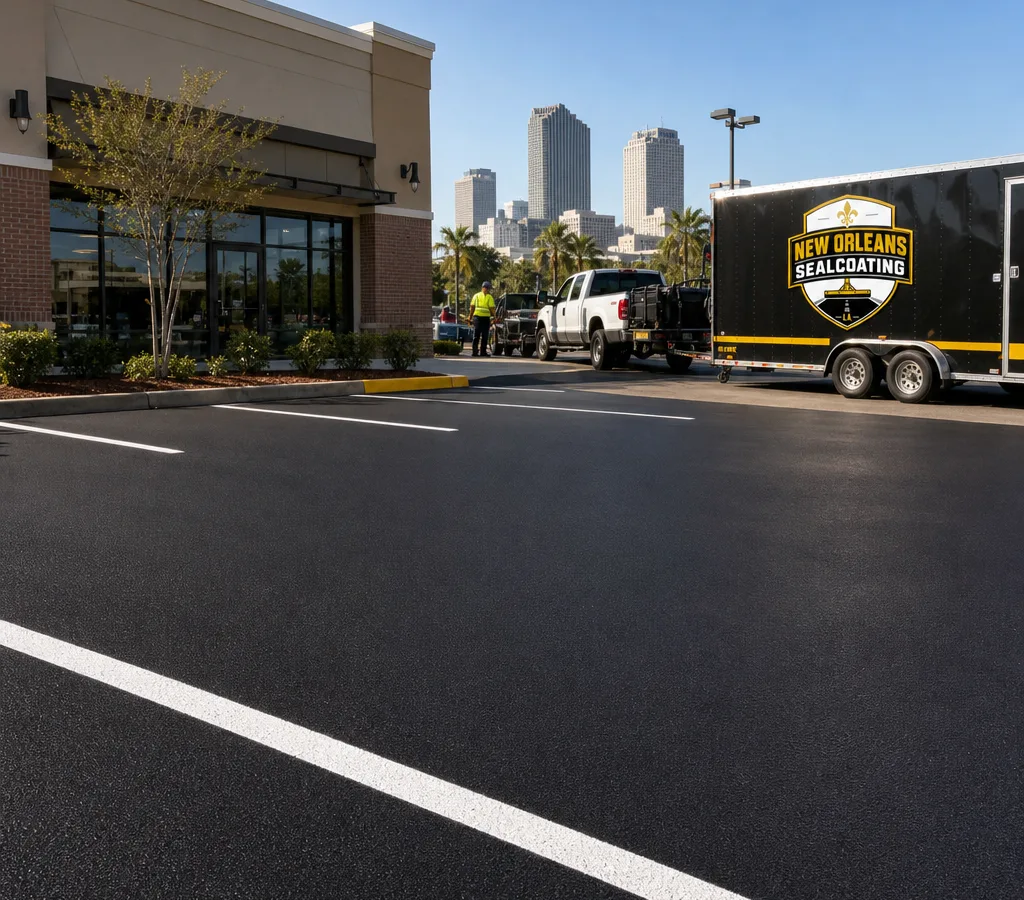
From single driveways near Rivertown to commercial pavement along the Veterans corridor, we seal asphalt in Kenner on a prep-first basis. The inspection tells us what the surface needs; the written scope tells you what you are paying for.
Asphalt fails from the top down. Sunlight oxidizes the binder, rain works into the surface, and vehicle traffic grinds the weakened aggregate loose until the pavement turns gray and porous. Sealing restores that protective layer. It is maintenance rather than repair, which is exactly why the condition of the asphalt underneath decides whether a coat is worth applying this year.
A Kenner project moves through assessment, cleaning, spot treatment, and finish detail. What each stage involves is set out below.
Area, condition, and problem spots get recorded at the walkthrough. That record is what the quote is built from, so there is no mid-job revision of the number.
Loose material, silt, and vegetation at the edges come off first. Sealer applied over dirt releases in patches, usually within the first wet season.
Oil and fuel stains are primed so the coating bonds across them instead of leaving soft, discolored patches that wear early.
Concrete, curbs, and walks are masked, and the perimeter is cut by hand so the finished line reads straight rather than feathered onto adjacent surfaces.
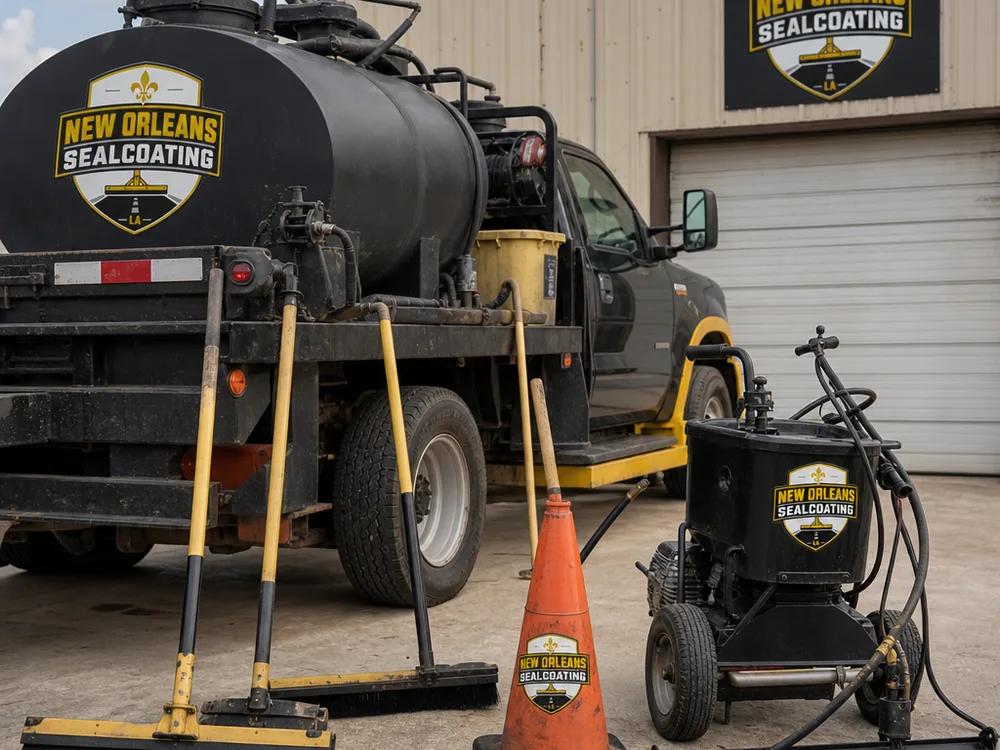
Our truck and application equipment arrive staged for the job, so setup does not eat the morning. Material goes on with the right tool for the surface: squeegee where a tight, worked-in coat matters, spray where an open area needs even coverage. Masking goes down before any sealer moves, because overspray on a garage apron or a storefront walk is the one defect nobody stops noticing.
Kenner work is quoted against the same published range we use across New Orleans: roughly $300 to $900 for many residential driveways, and commonly $1,500 to $6,000+ for larger commercial areas, depending on square footage and access. Two properties of identical size can price differently once crack repair, oil spotting, masking, and the amount of hand edging are counted. The written quote follows the measurement, not the phone call.
Coverage, crack handling, and scheduling come up on most Kenner estimates. Short answers to each are below.
For most residential driveways in reasonable condition, yes. Commercial lots carrying delivery traffic or tight turning movements often justify two, and we say which applies to your pavement at the quote rather than upselling a second coat on site.
No. Cracks are cleaned and filled as their own line item first. Coating straight over them hides the defect for a few weeks and then mirrors it through the new surface.
A few days is usually enough, though the weather has more say than the calendar does. We hold a slot and confirm it once the forecast supports a full cure.
Usually. Multi-unit pavement gets split into phases so parking stays available in sections, and we post the sequence so nobody returns to a coated bay.
It does not. A pothole means the asphalt and often the base have failed, which is a repair job. We will flag it, price the repair separately, and seal once the surface is sound.
Tell us the property and we will come measure it. You get prep, crack repair, coating, and scheduling laid out in plain language before anything is committed.
Request a quote
Send the details and we will arrange an on-site inspection, then follow up with a written scope and price.