A written scope before work starts
You'll know what prep is included, how cracks are handled, where we will edge, and what cure time to plan for.
Serving New Orleans, Louisiana & surrounding areas
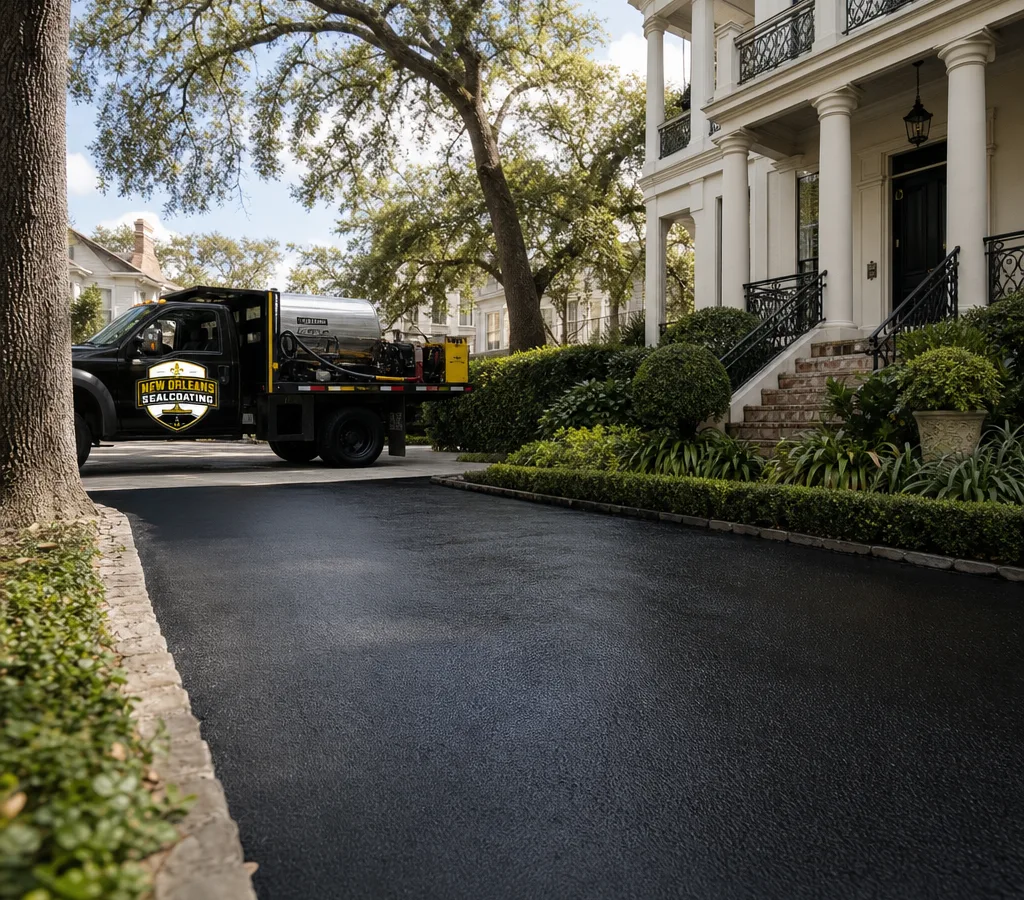
Protect your asphalt from sun, rain, and daily wear with a clean, dark finish that makes your driveway look cared for. Get a clear scope, straightforward scheduling, and professional application from New Orleans Sealcoating.
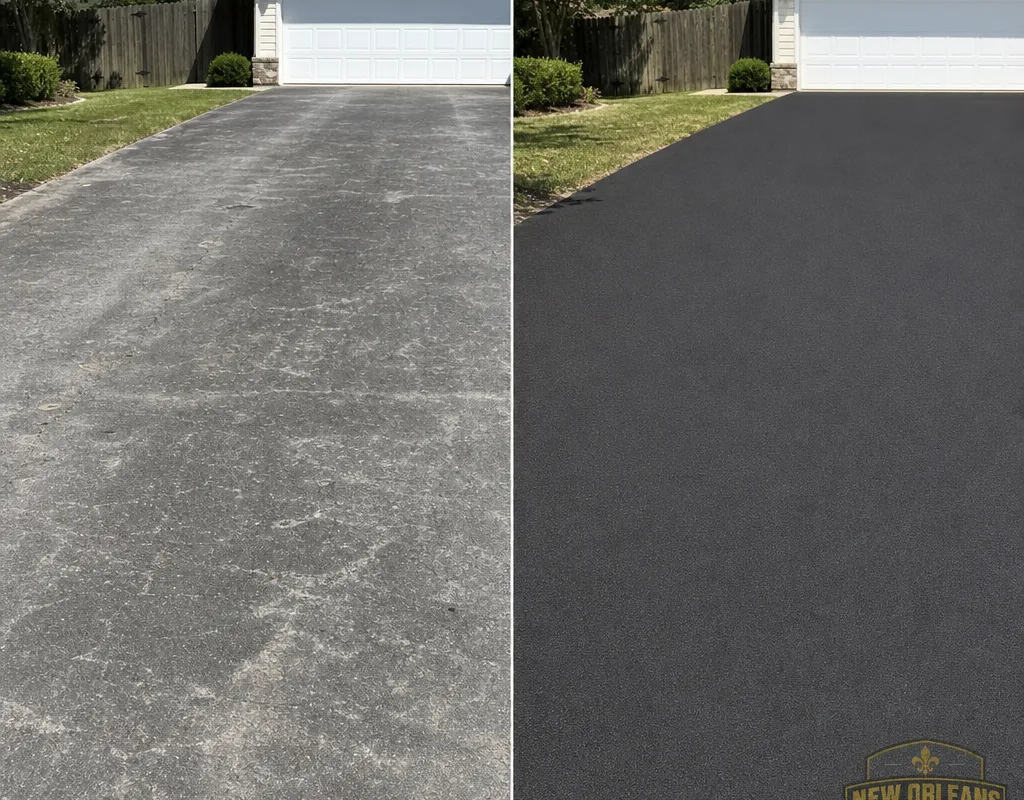
Asphalt driveway sealcoating New Orleans homeowners choose is mainly about protection and appearance: it renews the dark color, helps slow oxidation from UV exposure, and adds a thin barrier that sheds water and resists gas and oil drips.
Sealcoating is not a structural repair. If a driveway has alligator cracking, crumbling edges, or widespread base failure, sealing alone won't stop the damage. The right plan is usually a mix of crack repair, spot patching where needed, and then a uniform driveway seal coating once the surface is sound enough to benefit.
In New Orleans, weather swings from intense sun to sudden downpours. That cycle drives fading and surface dryness, and it also makes timing important. We help you pick a good window so your residential sealcoating has time to cure and you can get back to parking with minimal disruption.
A good result comes from prep and consistent coverage, not just rolling on more product. Our blacktop driveway sealing New Orleans process starts with a careful look at the surface and the edges (where failures often begin).
Typical scope includes:
If your driveway has low spots that hold water, we'll point them out. Standing water shortens the life of any blacktop sealing because water keeps working at the surface and the edges between storms.
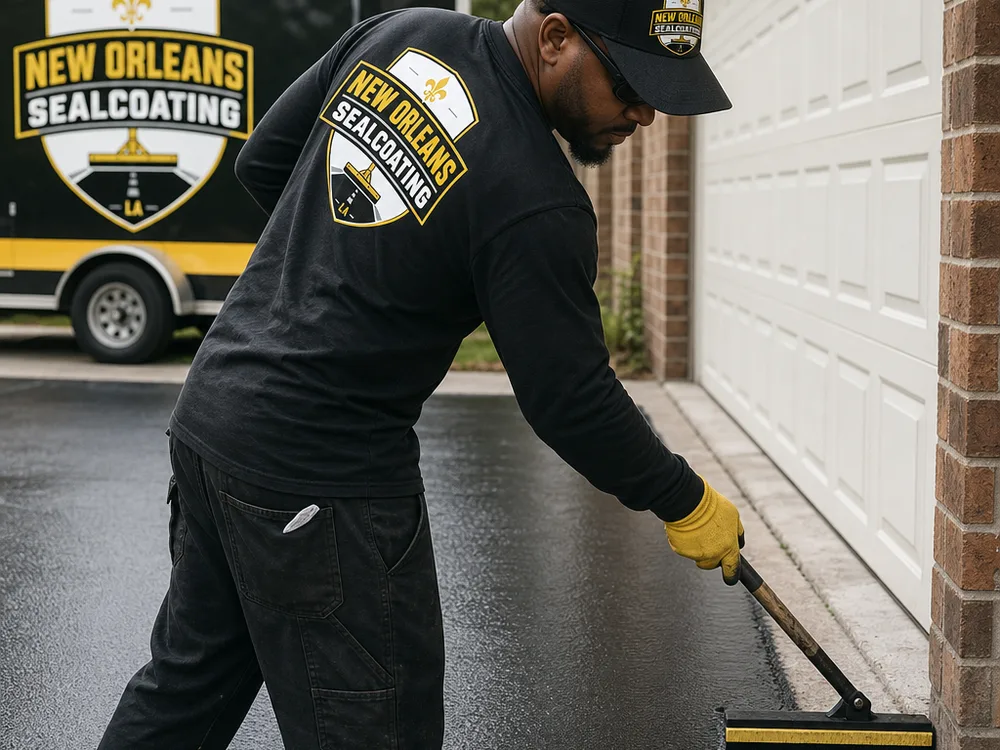
Proper preparation protects the finish from early tracking, weak adhesion, rough edges, and New Orleans rain and heat.
Book Your Free InspectionYou'll know what prep is included, how cracks are handled, where we will edge, and what cure time to plan for.
We don't treat a newer driveway the same as an older, weathered surface. Condition drives the cleaning, crack repair, and application approach.
Detail work around garage thresholds, sidewalks, and borders is what makes sealing look professional instead of messy.
Sealcoat needs time to set and cure. We plan around rain risk and humidity so you're not left guessing when you can drive on it.
We set expectations for cars, delivery access, and foot traffic, so the finish isn't ruined by early tire marks.
We inspect, prepare, apply, and provide practical access guidance based on the surface and weather conditions at your home.
Book Your Free InspectionWe measure the driveway area, look at cracking patterns, check drainage and edges, and confirm any areas that need repair before sealcoating.
We clear vegetation, remove loose material, clean the surface, and fill cracks so the sealer goes down on stable pavement.
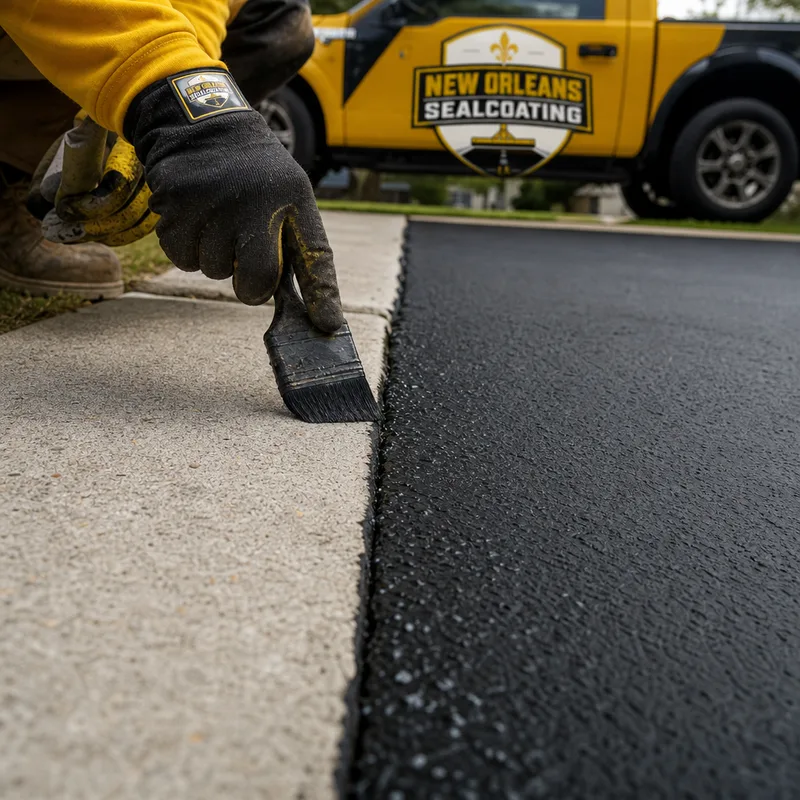
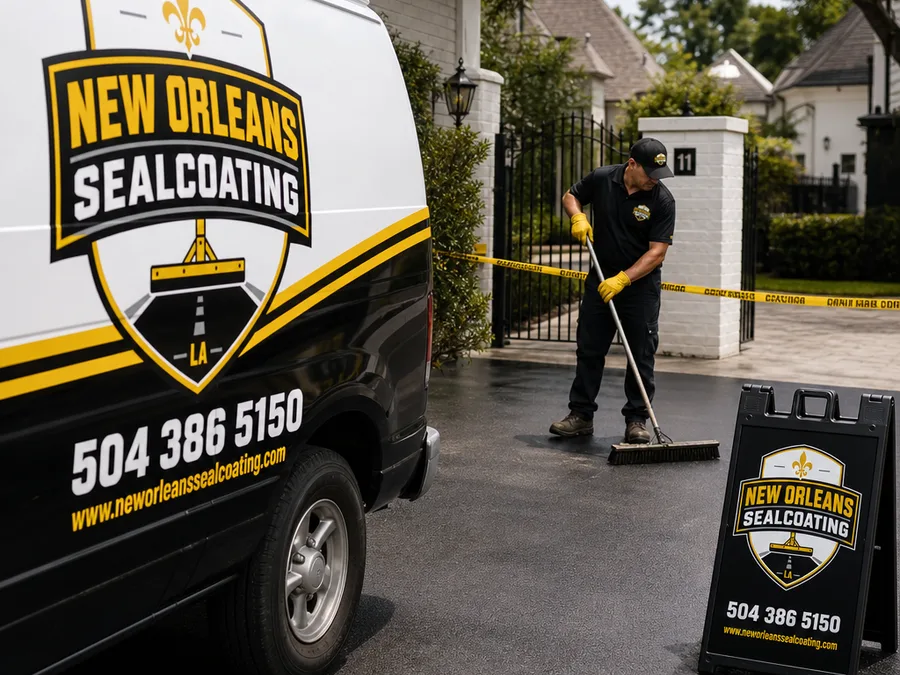
We protect adjacent concrete and landscaping, hand-cut edges where needed, then apply the sealcoat for consistent coverage.
We give you practical guidance for foot traffic and vehicle traffic based on conditions that day. Most driveways need at least a full day before parking, and sometimes longer with higher humidity or limited sun.
Asphalt driveway sealcoating in New Orleans typically ranges from about $250 to $900 for most residential driveways, with larger or more complex layouts running higher. Smaller, straightforward driveways often land in the lower end of that range, while longer drives with turnarounds or multiple parking pads cost more.
Your price depends on square footage, crack filling needs, cleaning and weed removal, access for equipment, and how weathered the surface is. After a quick site check, we confirm the exact scope and price in writing so you can plan your schedule and cure time.
We handle driveway sealcoating across New Orleans and nearby neighborhoods, and we adapt the plan to what we actually see on your pavement.
In Mid-City, lots tend to have tighter driveways and close property lines, so clean edging and protecting nearby concrete matters as much as the coating itself. In Lakeview, longer driveways and multi-car pads can mean more square footage and more time spent keeping coverage consistent across large open areas. Uptown properties often have older pavement and tree cover; shade and leaf litter make surface cleaning and cure time planning especially important. Gentilly driveways can vary widely in age and condition, so we pay extra attention to cracks and edge breakdown before recommending blacktop sealing.
If you're comparing companies, start with basics: Will they clean thoroughly, handle cracks in a defined way, and give you realistic cure-time guidance for New Orleans weather? A reliable sealcoating company in New Orleans should be able to explain the prep, the product type being used, and what you can do to keep the finish looking good between re-seals.
Plan on keeping vehicles off for at least 24 hours, and sometimes 48 hours depending on humidity, shade, and how much sun the surface gets. Foot traffic can often return sooner, but turning tires too early can leave marks that stay visible. We'll give you day-of guidance based on actual conditions at your home.
Cracks should be repaired first because sealcoat is a thin protective film, not a crack filler. We typically fill cracks as part of residential sealcoating in New Orleans, and we'll point out any cracks that are too wide or unstable and need a different repair approach before sealing.
Yes, as long as the concrete is protected and edges are handled carefully. We mask and cut in by hand where needed so you get a clean line and don't end up with sealer smeared onto concrete.
The best time is when you have warm temperatures and a low chance of rain for the cure window. Because New Orleans can get sudden storms, we schedule around the forecast and your driveway's sun exposure so the sealer has time to set up properly.
Sealcoating will darken and protect the surface, but it won't level low spots or rebuild missing asphalt. If the driveway holds water or has pitting and raveling, we'll explain whether patching or spot repairs are needed before driveway seal coating makes sense.
Many homeowners re-seal every 2 to 3 years, but the right interval depends on sun exposure, traffic, drainage, and how quickly the surface oxidizes. If your driveway is turning gray and absorbing water instead of shedding it, it's usually a good time to get it evaluated for asphalt driveway sealing.
Tell us what you're seeing—fading, cracks, rough texture, or just a tired look—and we'll recommend the right prep and sealcoating approach for your property. New Orleans Sealcoating is based at 1440 N Dorgenois St, Suite 4, New Orleans, LA 70119.