
Survey the whole surface
Drive lanes, approaches, and bays are assessed separately, because each wears at its own rate and may need different work.
Serving New Orleans, Louisiana & surrounding areas
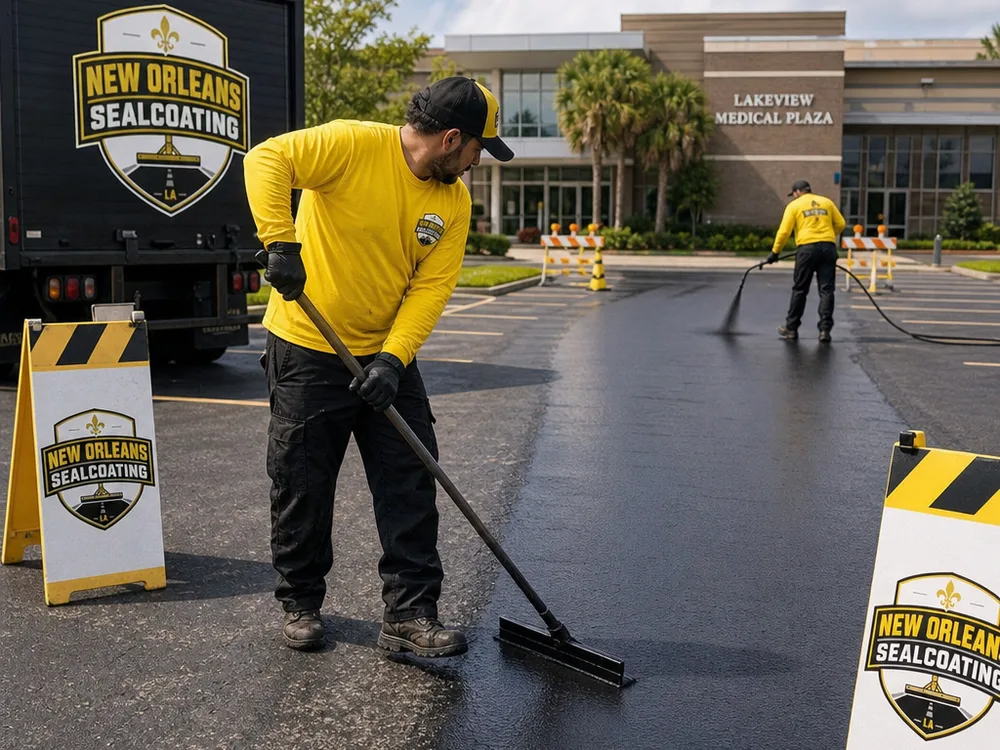
Harvey pavement runs from tight residential driveways to busy commercial frontage, and the two need different handling. We quote both from a walk of the surface, with the access plan written down before any material arrives.
Wear is never even across a working lot. Drive aisles, delivery approaches, and turning points break down well ahead of the parking bays beside them, and a seal coat applied without accounting for that evens out the color while leaving the real problem in place. We map which areas carry the load, flag what needs repair, and sequence the job so the hardest-used pavement is handled properly.
On a working Harvey lot the sequence matters as much as the materials, because the property has to keep operating. These are the four stages involved.
Drive lanes, approaches, and bays are assessed separately, because each wears at its own rate and may need different work.
The surface is cleared of debris and silt, edges are cut back, and stained areas are treated so the sealer has clean asphalt to grip.
Cracks are filled and failed areas are identified and priced as repair. Coating is the last step, never a cover for structural damage.
Sections are closed, coated, and reopened in a planned order so the property keeps working while the pavement cures.
A commercial lot rarely has the option of closing, so the phasing is part of the scope rather than an afterthought. We agree the sequence with you, set cones and tape to match it, and post which sections are closed and when they reopen. Vehicles on uncured sealer undo the work and leave marks that stay visible, so the barricading matters as much as the application.
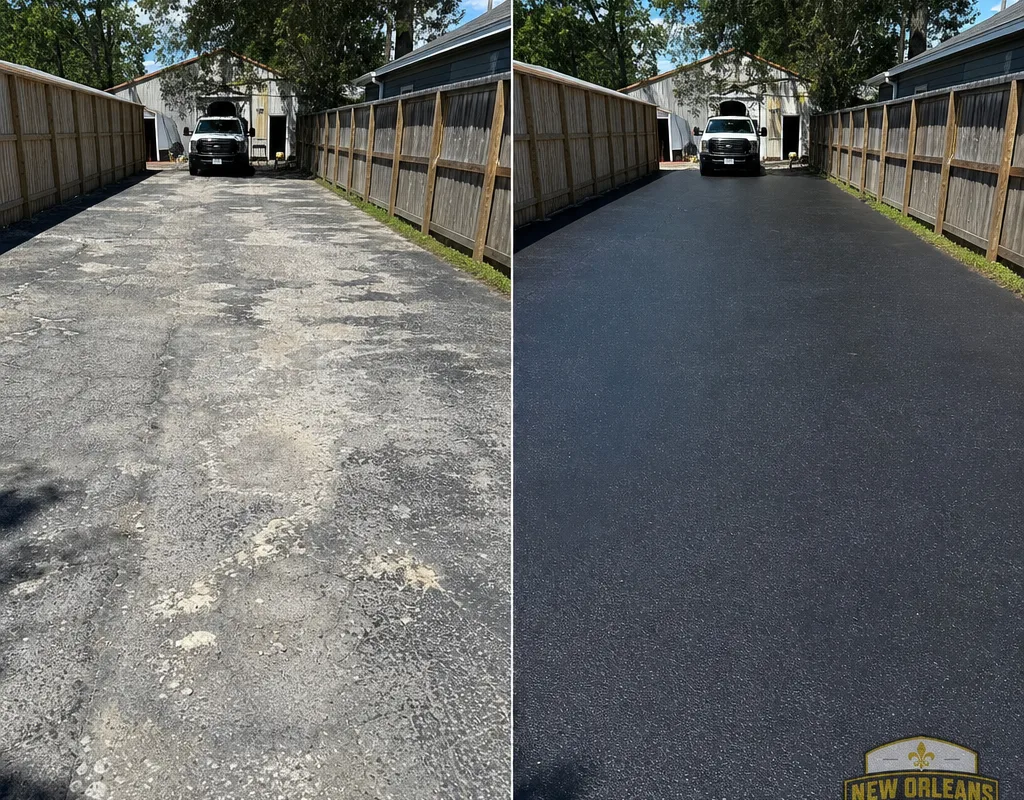
Harvey projects are priced off the range published for our New Orleans work: about $300 to $900 for many residential driveways, and $1,500 to $6,000+ for larger commercial areas depending on square footage and access. On a working lot, the phasing and the amount of crack repair usually move the number more than square footage alone does. We confirm the figure in a written quote once the pavement has been measured.
Property managers need specifics before they can approve the work: how the lot gets phased, when striping returns, and what ends up in the file. Those are covered here.
In most cases, yes, by working in phases. We close and reopen sections in an agreed order, so part of the lot is always available rather than the whole surface going offline.
After the coating has cured. We can match the existing layout or adjust stall counts and ADA markings, and that gets decided before the work starts.
Tell us the delivery windows and we build the phasing around them. Heavy trucks on fresh sealer leave marks that do not come out, so the schedule matters.
We separate it out. Failed areas are quoted as repair work, the sound pavement is sealed, and you decide the order rather than paying to coat asphalt that needs rebuilding.
Yes. The written scope covers measured area, prep, crack repair, coating, and the phasing plan, which is usually what a manager needs for approval and for the file.
We will measure the lot, report the pavement condition, and write up the scope with a closure sequence that keeps the property operating.
Request a quote
Send the details and we will arrange an on-site inspection, then follow up with a written scope and price.