
Thorough cleaning before material
We remove weeds, silt, and loose asphalt so the sealant bonds to pavement, not debris. Clean, dry cracks are the starting point for durable results.
Serving New Orleans, Louisiana & surrounding areas
Crack Repair in Minneapolis
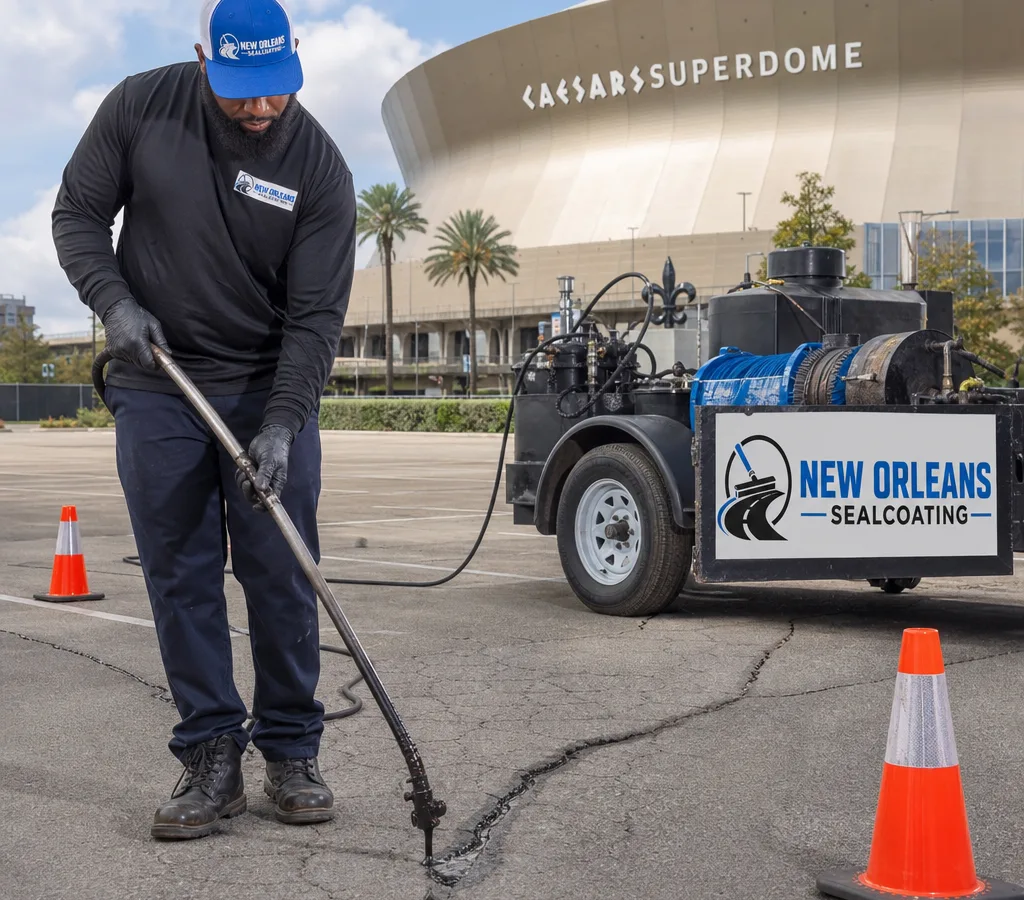
Stop cracks from turning into potholes. We seal and fill asphalt cracks on driveways and parking lots with clean prep, the right material for the crack size, and a written scope before work starts.
Repair Early, Protect the Base
Pavement crack repair Minneapolis property owners schedule for one main reason: once water gets into asphalt, it starts breaking down the base and the crack widens fast through freeze-thaw cycles. Sealing or filling at the right time is a small project compared to patching or replacement later.
Cracks are not all the same. Some are tight and shallow. Others are wide, branched, or have edge breakup. The method and material should change with the crack, not the other way around. Our work focuses on proper cleaning, correct crack prep, and an application that bonds to the asphalt so it can expand and contract with Minnesota temperature swings.
Typical surfaces we work on include residential driveways, small multi-family lots, and commercial parking areas where cars track water and grit into every opening. If you are comparing contractors, ask how they decide between crack filling Minneapolis work and full asphalt crack sealing Minneapolis work, what prep they do before material goes down, and what conditions can delay the job—moisture, poor adhesion, or crumbling edges.
Choose the Right Repair
The right approach depends on crack width, movement, and whether the surrounding asphalt is sound.
A good plan also looks at the pattern. Long linear cracks may signal shrinkage or joints. Alligator cracking can signal base failure, where sealing alone will not solve the root problem. In those cases, we will explain what crack repair can accomplish now and what to watch for next season.
Practical Workmanship
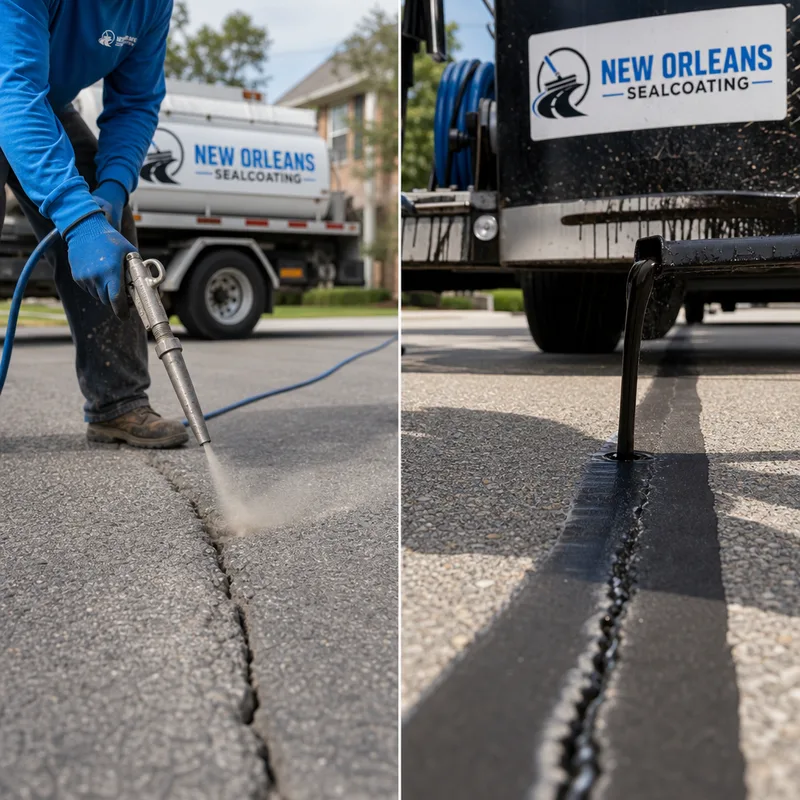
We remove weeds, silt, and loose asphalt so the sealant bonds to pavement, not debris. Clean, dry cracks are the starting point for durable results.
Narrow hairline cracks, 1/2-inch openings, and wide gaps should not all get the same product. We choose crack filler or hot-pour sealant based on movement and width.
A consistent band over the crack helps shed water and protects the repair. We keep it neat so it looks professional and does not create messy ridges.
Parking lots and shared drives need clear staging so residents and customers can still move around while repairs cure.
If the asphalt is crumbling, pumping water, or showing base failure patterns, we explain options and realistic expectations before you spend money on the wrong fix.
Property Fit
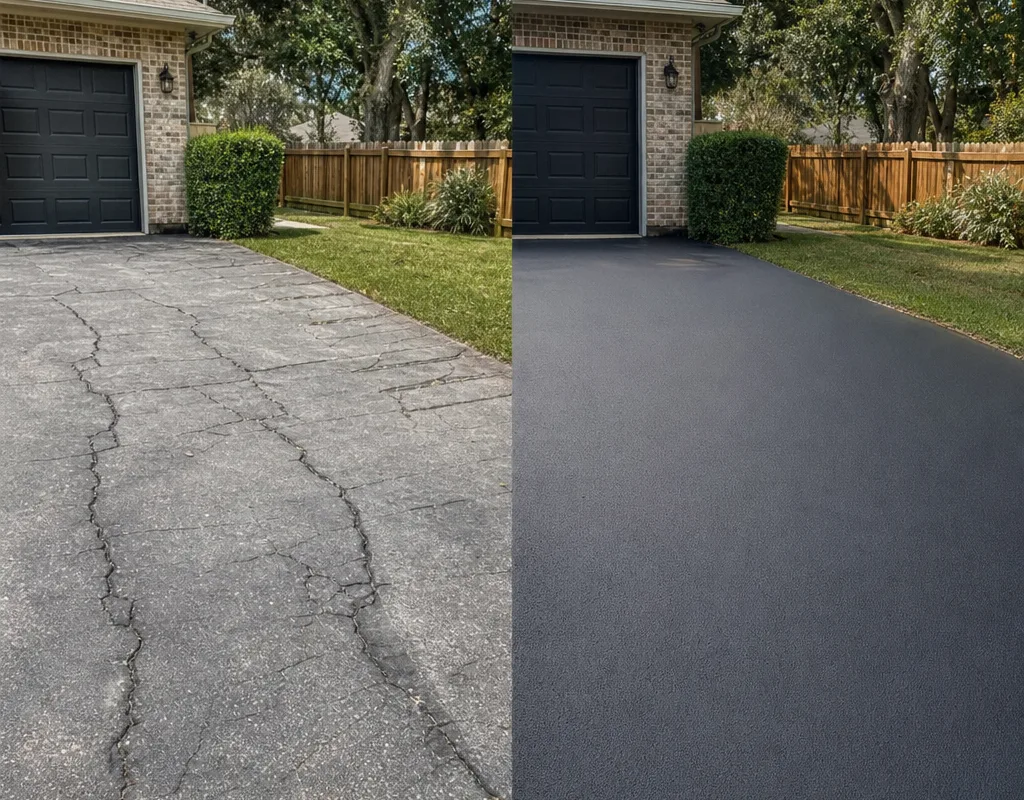
Driveway crack repair Minneapolis homeowners request often starts with winter-opened cracks near the street, garage apron, or low spots where water sits. Filling can help keep water from reaching the base and stop sand and salt from grinding the edges apart.
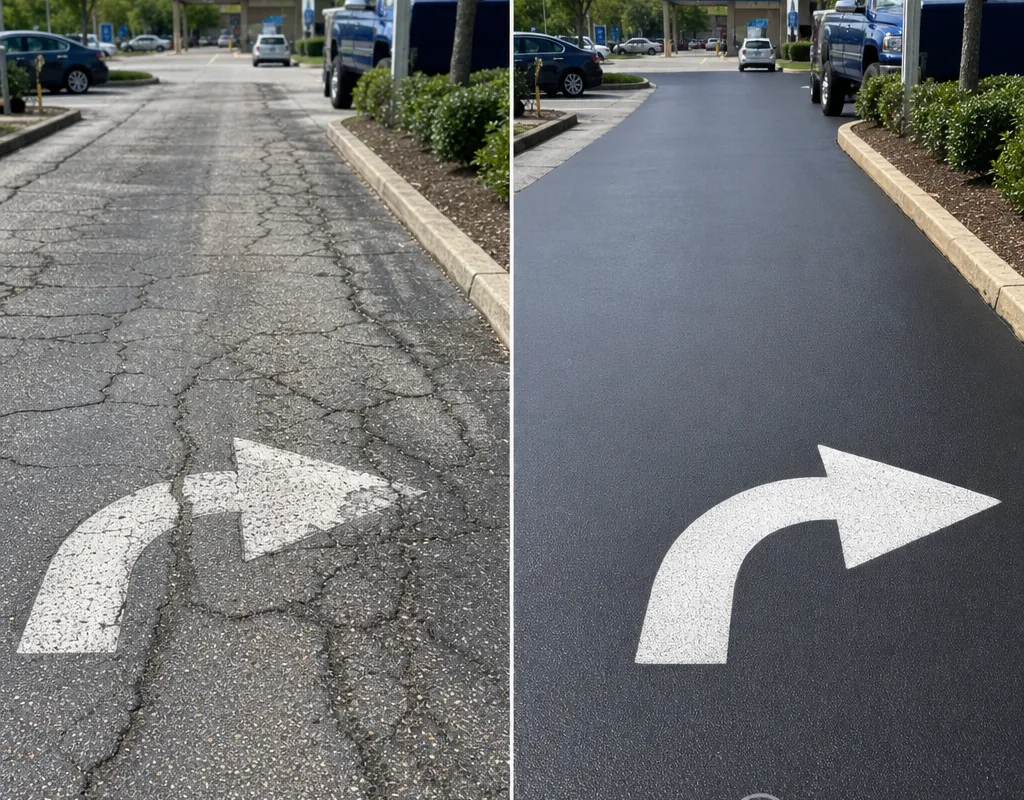
Parking lot crack repair Minneapolis managers schedule must account for turning tires, loading areas, entrances, catch basins, and standing water. We stage the work around access while addressing the paths water uses to reach the pavement base.
In Minneapolis, freeze-thaw cycles and de-icing products continually stress asphalt. The goal is to close pathways for water before the next hard cycle and use material that stays flexible instead of turning brittle.
From Inspection to Reopening
We look at crack types, widths, and signs of base issues. You get a clear scope showing which cracks get filled, which get sealed, and which areas need another repair.
We remove vegetation, dirt, and loose asphalt. For many jobs, compressed air and mechanical cleaning help the material bond properly.
If routing is recommended for wide or irregular cracks, we cut a uniform channel to create a better reservoir and stronger bond.
We apply the selected filler or hot rubberized sealant at the right temperature and depth, then tool or squeegee it for a consistent finish.
We explain when the surface can take foot and vehicle traffic, and stage lot work so access stays practical for residents or customers.
Estimate Factors
Pavement crack repair in Minneapolis typically ranges from about $0.75 to $2.50 per linear foot for basic crack filling or sealing, with larger commercial lots sometimes priced by scope and mobilization rather than a simple per-foot number. Small driveway crack repairs may land in the low hundreds, while larger parking lot crack sealing scopes can reach the low thousands.
Final pricing depends on total linear footage, crack width and severity, routing needs, cleaning time, access and traffic control, and whether the pavement is dry and ready on arrival. The exact cost is confirmed after an onsite walkthrough and a written scope.
Field Work
Practical Answers
Dry weather with moderate temperatures is best because sealant bonds and cures more reliably when cracks are clean and moisture-free. In Minneapolis, many owners schedule crack work in the warmer, drier months so repairs are in place before the next freeze-thaw cycle stresses the pavement again.
Hot rubberized crack sealing is usually better for working cracks that expand and contract through the year because it stays flexible. Cold-applied crack filling can be a good fit for smaller, more stable cracks, especially on lower-traffic driveways, as long as prep is thorough and the crack is dry.
Yes, most parking lot crack repair can be staged in zones so traffic still flows and customers can park, as long as there is a plan for curing time and safe routing. For busier properties, we often recommend off-peak scheduling and clear cone layouts so vehicles do not track material.
Routing is not mandatory for every job, but it can improve performance for wide, irregular, or deteriorated cracks by creating clean edges and a consistent reservoir. If cracks are tight and sound, cleaning and sealing without routing may be appropriate and more cost-effective.
Many crack fillers and hot-pour sealants are ready for light vehicle traffic the same day, but timing depends on temperature, humidity, and how thick the application is. We give a specific access window at the job so you do not risk tracking or pulling up uncured material.
No, alligator cracking usually points to base failure, and sealing over it does not stop the underlying movement. We can seal surrounding linear cracks to slow water intrusion, but areas with true alligator patterns often need patching or structural repair to address the cause.
Plan the Repair With Confidence
Share a few details about your driveway or parking lot and what you are seeing. New Orleans Sealcoating will confirm whether crack filling or crack sealing fits best, then provide a written scope and schedule for your pavement crack repair Minneapolis project.